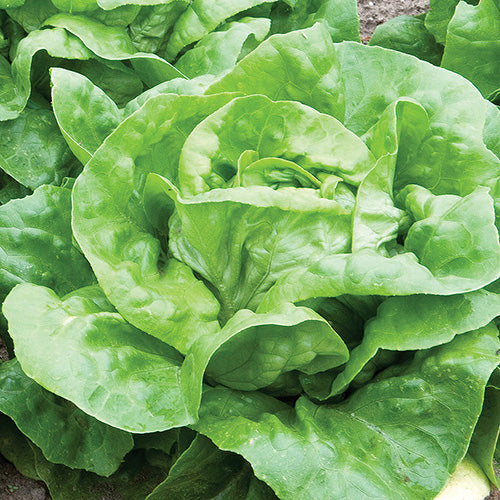
Kopfsalat Mirlo Plts (52 Tage)

Find it on Pg.16 of our 2026 Catalogue
Butterhead Lettuce Mirlo Plts (52 Days) - 926A

Großer, cremig-grüner Butterkopfsalat, frühreif für seine Größe. Zarte, buttrige Außenblätter und dichte, zarte Herzen sind hervorragend für frische Salate geeignet. Pelletsamen für präzises Säen und weniger Ausdünnen. Präzisions-Multi-Pellets

Pflanzanleitung
Samen im Freiland säen, sobald es Wetter und Bodenbedingungen zulassen. Samen leicht mit Erde bedecken, 6-7 Samen pro 30 cm Reihe. Durchschnittlicher Gartenboden und ein sonniger Standort bringen eine Menge Kopfsalat hervor. Bei einer Höhe von 5 cm auf 20 cm Abstand ausdünnen. Aufeinanderfolgende Aussaaten alle 10-14 Tage sorgen den ganzen Sommer über für frischen Kopfsalat. Kopfsalat kann auch als Kontrastpflanze im Blumengarten gepflanzt werden.
Jedes Pellet enthält 5 bis 7 Samen. Direkt in Behälter säen, ein Pellet füllt einen 30 cm großen Behälter.

Size Options

Variant PriceQty
926A - 100 Paletten $6.10
926D - 500 Pal. $22.25
926E - 1000 Paletten $40.80
926F - 5000 Pal. $118.60
  • 5 stars: 1 (33%)
  • 4 stars: 0 (0%)
  • 3 stars: 0 (0%)
  • 2 stars: 1 (33%)
  • 1 star: 1 (33%)
N
Nigel lilley (Canada)
926A - 100 plts

bad year poor germination

Excessive rain can absolutely affect lettuce growth, especially if it occurs shortly after planting or during germination.

Heavy or prolonged rainfall can:

Wash seeds deeper into the soil, making it difficult for seedlings to reach the surface.
Cause soil crusting once the surface dries, preventing seedlings from emerging.
Reduce oxygen in the soil, slowing germination and root development.
Promote seed rot or damping-off diseases, particularly in cool, saturated soils.
Leach nutrients, which can slow the growth of young lettuce plants.

In Winnipeg this spring, many gardeners experienced challenges due to periods of frequent rainfall and fluctuating temperatures, which created less-than-ideal conditions for lettuce establishment.

If only a small percentage of your lettuce germinated, heavy rain could certainly have been a contributing factor, especially if it occurred within the first week after planting. Other factors such as planting depth (lettuce seed should be covered very lightly—about ⅛ inch or 3 mm), soil temperature, and consistent moisture also play important roles.